Plant-based eating is recognised as an intervention to improve health outcomes. They could reduce the risk of type 2 diabetes, hypertension, cardiovascular disease and some cancers and may help manage weight.
The British Dietetic Association (BDA).
The following plant-based meal ideas have been curated for their nutritional content and ease of preparation. Images have been sourced from online vegan recipe creators. Nutritional information is provided by the NHS UK and the book ‘Vegan Savvy’ by dietician Azmina Govindji. Additional sources are shown in the meal information.
For more information about vegan nutrition view Health Benefits of Plant Foods: A Complete Guide.

Oat Milk Coffee
Plant-based oat drinks are typically fortified with various vitamins and minerals, including B12, D, calcium, and iodine. Sugar content varies significantly among these drinks. Choose the no sugar option for a healthier choice.
Image credit: myquietkitchen.com
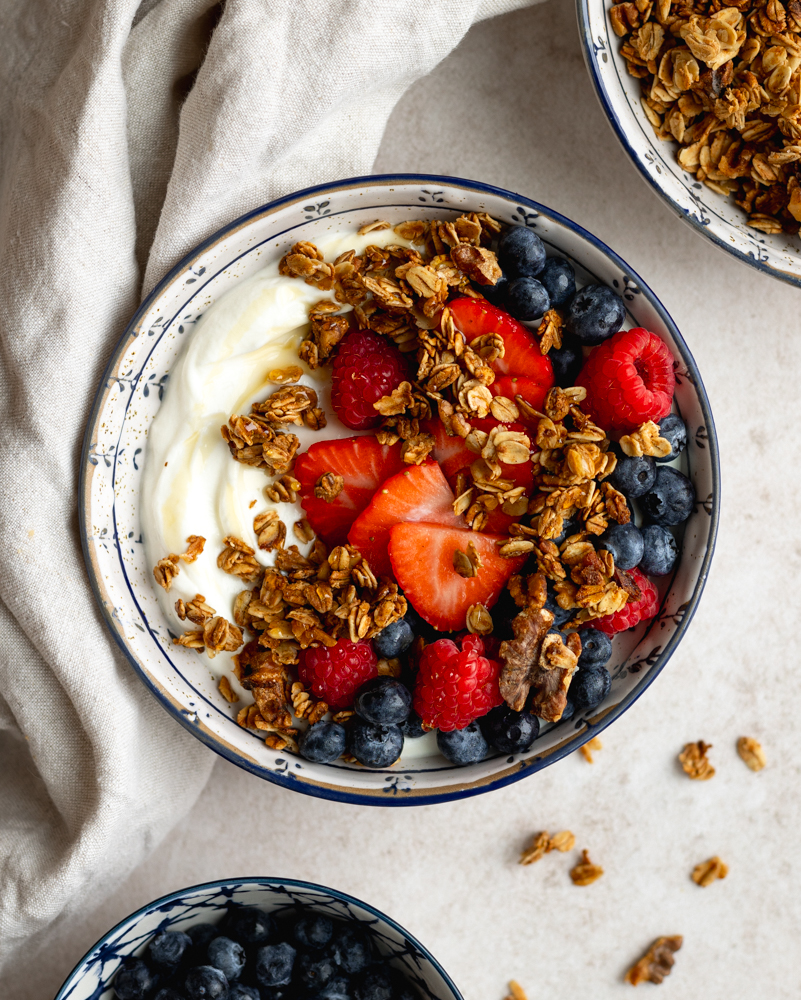
No Sugar Soya Yoghurt with Berries and Granola or Muesli
No sugar soya yoghurt contains protein and is generally fortified with vitamin B12, and calcium. Berries provide vitamin C and B vitamins. Combine with whole grains, nuts, seeds, and dried fruits. (e.g. minimally processed muesli and/or granola).
Image credit: daisybeet.com.

Banana and Walnuts on Toast
Bananas are a good source of natural sugar for energy, and they contain vitamins B1, B6, C, potassium, and magnesium. Walnuts contain protein, omega-3 ALA, iron, a range of B vitamins, and zinc. Wholemeal bread offers protein, iron, calcium, B vitamins, zinc, and selenium.
Image credit: EatSimpleFood.Com

Almond Butter and Apple Slices on Toast
Almond butter is rich in protein, healthy fats, iron, calcium, and choline. Raw organic apples provide Vitamin C (helps iron absorption), potassium, and antioxidants with anti-inflammatory benefits. Wholemeal bread offers protein, iron, calcium, B vitamins, zinc, and selenium.
Image credit: eatthismuch.com

Herbal Tea Infusion
Herbal teas are hydrating, typically low in caffeine, and often free from added sugars, making them a great alternative to sugary beverages.
Research has shown that our sense of smell plays a significant role in cognitive function and emotional well-being. In fact, some studies suggest that engaging with aromatic herbs like rosemary, mint, or lavender can improve alertness, reduce stress, and even boost cognitive performance.
Several herbs have been shown to support healthy metabolism and blood sugar regulation. For example, cinnamon and ginger have been extensively studied for their ability to help control blood sugar levels, while other herbs like rosemary and sage are known for their cognitive and memory-boosting properties.
Source: https://ncim.org.uk/how-herbal-teas-can-benefit-your-health
Image credit: Whittard of Chelsea
 Wendy Corbett